
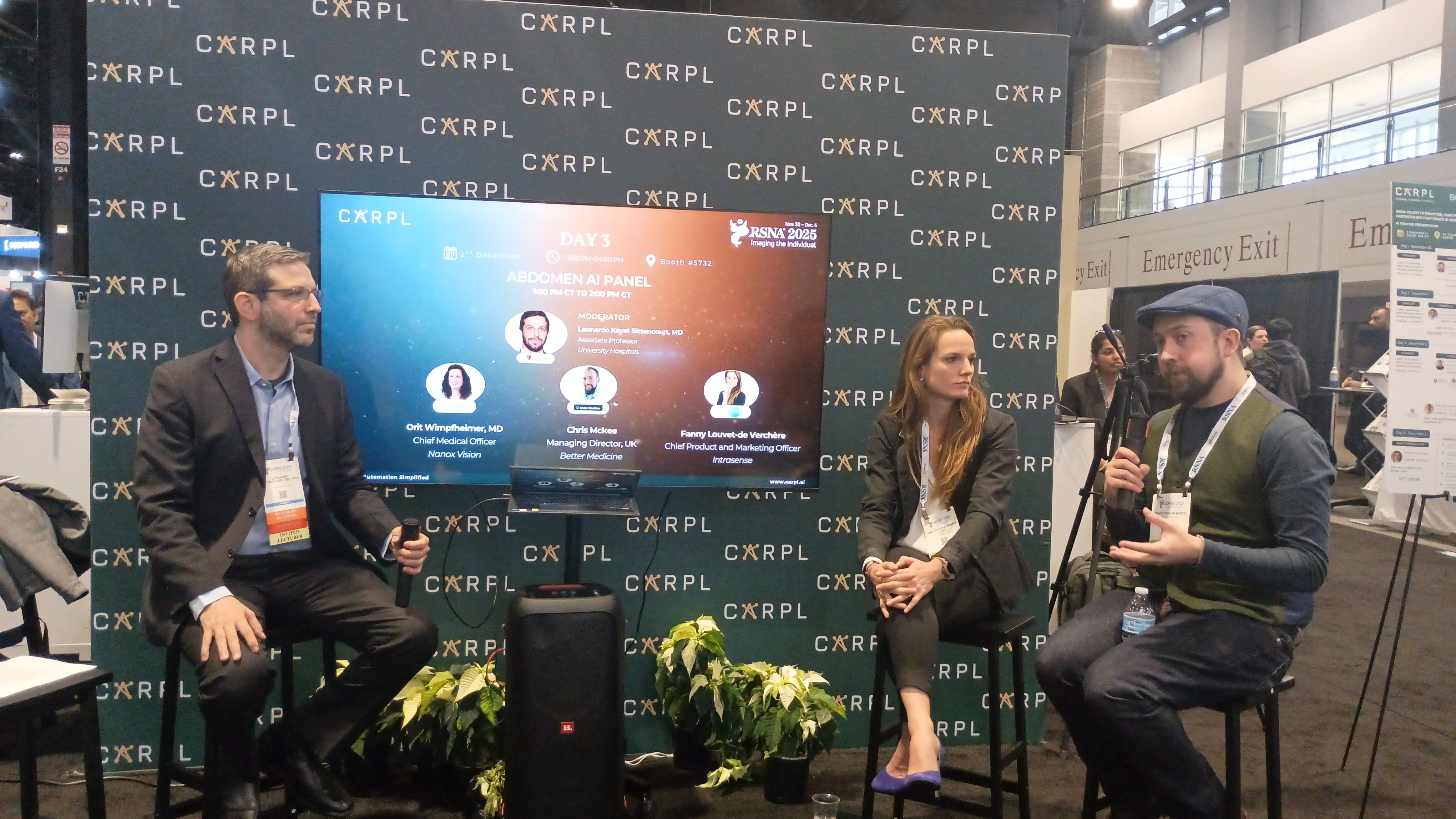
The discussion addressed why AI has predominantly focused on "low-hanging fruit" areas like stroke, lung, breast, and prostate. These areas offer high global demand, screening programs, and quick revenue generation. However, this specialization has led to limited-use, "one trick pony" AIs and has neglected patients with other common cancers, such as kidney or liver cancer.
The consensus amongst the panelists was that the abdomen is "really underserved" and presents an "almost a gold mine of opportunity" for AI companies. Abdominal imaging is significantly more complex than other areas, with extremely diverse reasons for imaging, a variety of protocols, and diverse diseases and users. While complex, the clinical value is "potentially enormous".
A major theme was the necessity of solving the "boring yet simple" tasks that contribute to radiologist burnout. While stroke detection is "flashy," abdominal imagers face numerous "low value and burnout generating tasks". The panelists agreed that automating mundane tasks -like counting or measuring a renal cyst is invaluable. One speaker analogized this to improving the "piping" or "plumbing of a city", necessary for things to function, allowing the radiologist to focus on complex diagnosis. The goal is to prevent burnout and help manage the global shortage of radiologists.
Panelists provided concrete examples of AI delivering immediate value:
Incidental Findings and Early Detection: This is where AI acts as a "safety net tool". Most kidney cancers are found incidentally and are frequently missed. AI can prevent outcomes like a stage 4 kidney cancer diagnosis that was present as stage 1 two years prior. Another solution for pancreas cancer (one of the deadliest) helps detect lesions smaller than 2 cm, significantly improving the currently low five-year survival rate.
Workflow Efficiency: Solutions automate time-consuming measurements and follow-up, such as automatic RESIST (Response Evaluation Criteria in Solid Tumors) reporting, which is often "not even done" due to the time commitment.
Opportunistic Screening: AI can look at organs the radiologist is not specifically focused on, acting as a companion.
The Role of Trust and Platforms in Adoption
Widespread AI adoption requires proving a business case beyond technical metrics like accuracy, demonstrating real-world positive impact on workflow. This involves health economics studies to convince CFOs that the technology saves money and time while improving patient outcomes.
The challenge of non-standardized adoption, where every solution feels like a new "study", can be mitigated by platforms. Given the high complexity of the abdomen with multiple organs, findings, and diseases, platforms are essential for orchestration. A platform can run multiple AI models simultaneously on a single scan, providing all the needed answers in one "singular workflow," overcoming the limitations of single-vendor, single-organ solutions.
The panelists closed with a call to action for the next five years:
Do More: Prioritize Opportunistic Screening: The industry must move away from "tunnel vision" focused on single organs and instead broaden its perspective to leverage AI as a companion for opportunistic screening.
Stop Doing: Overpromising Characterization and Status Quo Thinking: While detection is strong, caution is needed not to "overpromise" AI's ability to characterize lesions (e.g., benign vs. malignant), as a wrong decision can have "devastating consequences". Most critically, the industry must "Stop thinking that abdominal AI is going to be applied exactly as we do medicine today," as AI signals a "revolution" in how radiologists read.
